Nudge Theory's Efficacy in Controlling a Group’s Behaviour

A consistent style of lifestyle for those of us in office jobs is, sadly, the sedentary lifestyle. An everyday life in which we barely move or hardly enough, if we do at all. If I look at my own life, on an average working day, the bare minimum of leaving my house, commuting to office, moving in that space, and commuting back – hardly gets me 2,000 to 2,500 steps in a day. By all accounts, that is a dismal range for a healthy person.
Physical inactivity is one of the most important risk factors for non-communicable diseases like heart issues and diabetes, thus creating a space to explore subtle interventions. Workplace health promotion is therefore of growing interest to support an active day using nudges. But first, what are these nudges? According to behavioural economists Richard Thaler and Cass Sunstein, ‘A nudge … is any aspect of the choice architecture that alters people’s behavior in a predictable way without forbidding any options or significantly changing their economic incentives. To count as a mere nudge, the intervention must be easy and cheap to avoid. Nudges are not mandates ...’[1]
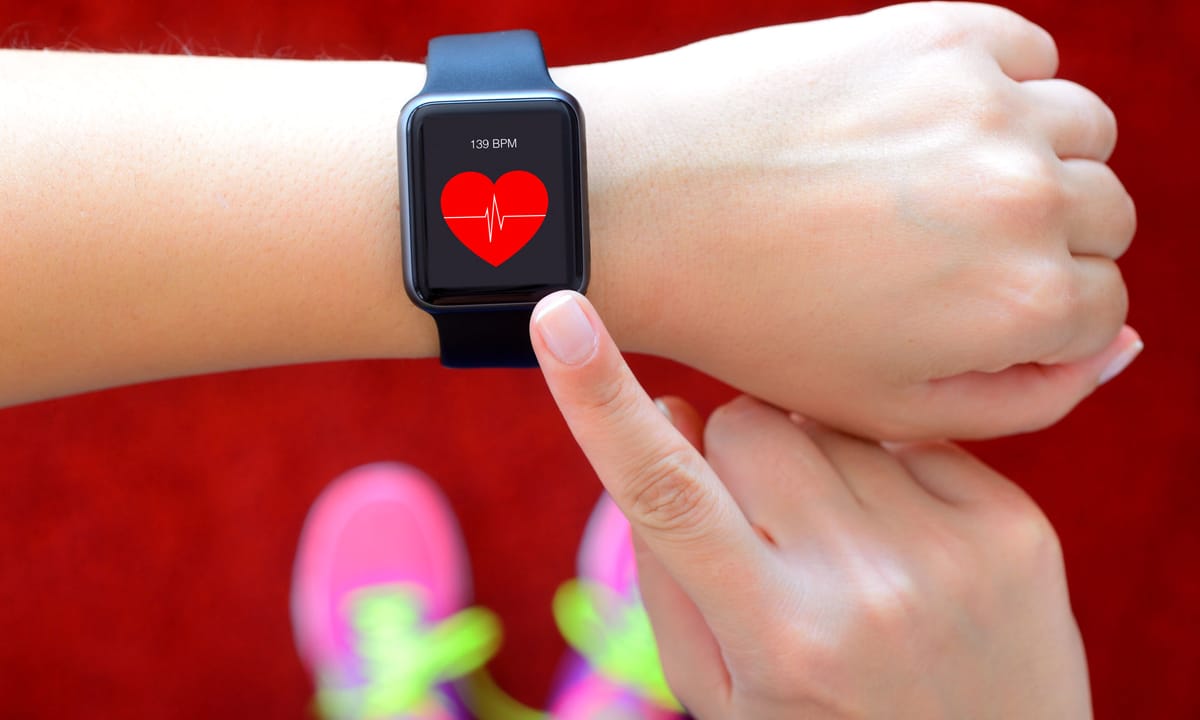
Fitness trackers in the form of wristbands, smartwatches, discreet rings, and mobile phone apps are devices that deploy the nudge theory to control and aid our daily physical activity. Here’s the basic idea: the device will count our steps and sleep hours; and inspire us to walk more and sleep better. This is a form of basic nudging provided with all fitness trackers. As you move on to more complex and expensive devices, a host of features get added: such as the amount of calories burned with every different form of physical activity; heart rate; anxiety measurement; weekly/monthly data analysis, etc.
If you’ve been sitting in one place for too long, in comes a vibrating nudge from the device. If you’re just 500 steps short of your daily step goal, another nudge. If you haven’t been sleeping well or your heart rate is rising, nudges follow to caution you. For example, Apple Watch notifications turn distractions into wellness nudges by pinging ‘Time to stand!’ after inactivity, boosting standing up by a significant percentage. These devices enable self-monitoring, goal-setting, and corrections, all of which is key to sustained habits. Customization also play a role – users control alerts, balancing engagement with privacy, which enhances and promotes the usage of these trackers.
Research shows nudges via wearables encourage and increase activity in office settings. One Arxiv study found participants outperformed baselines with nudging strategies, sustaining wearable use for better tracking. ‘Wearables activity trackers are becoming widely adopted to understand individual behavior. Understanding behavior may help in self-regulation such as self-monitoring, goal-setting, self-corrective, etc.; Nevertheless, challenges exist in attaining consistent use and adoption of wearables, which hinders behavior understanding. Research has suggested that nudging strategies may change and sustain human engagement. However, it is still unknown how nudging may affect human wearing behavior on an individual level ... The preliminary results of our research show that participants perform better when a nudging strategy is applied.’[2]
Apple's large-scale analysis across diverse users showed nudges tripling standing odds for ring-closers, especially over the age of seventy-five. Personalization, like calendar-sync prompts, boosts the encouragement further. One study concluded, ‘Apple Watch transforms notifications from distractions into positive wellness tools; emphasizing the importance of balancing nudging with customization with user control. Sociability and privacy remain crucial, especially with biofeedback-enabled fitness trackers. We conclude that Apple Watch enhances user engagement by triggering context-relevant interactions, nudging users to achieve their goals through small, motivated behaviors.’[3]
Although multiple reviews have identified nudges like wearable alerts and prompts reducing sedentary time, there are still some questions regarding its long-term efficiency. Field experiments with height-adjustable desks defaulted to standing increased light activity, easing prolonged sitting's harms. During pandemics, wearables revealed step drops of 2,812 daily but highlighted their role in rebounding activity via monitoring.
But there remain some issues in adopting trackers fully as lifestyle on the part of users. These include inconsistent wear and privacy worries with biofeedback. Studies urge balancing nudges with user control to avoid overload. Pandemic data linked step drops to stress, underscoring nudges' reminder role for busy workers.[4]
In offices though, nudges integrate seamlessly: standing desk defaults prompt posture shifts, while app vibrations cue walks. Studies suggest workplace cues like visible stairs or meeting walks to embed activity culturally.
Effectiveness, however, grows with time; one nudge held impact over horizons, unlike small trials. Other sociability features, like group challenges, offer a fantastic USP for people who don’t prefer exercising alone. It could enhance group behaviour control.[5] Workplace programmes scale nudges company-wide, fostering active cultures via shared trackers and leaderboards. For groups like office teams, collective goals amplify effects. For instance, a few years ago I worked at a publishing house where the HR gifted a Fastrack fitness tracker to its staff as a Diwali gift, and then went on to reward the employee with the highest step count every month for the next one year. I can certainly say that Thaler-Sunstein principles can extend to policy, and also that nudges curb inactivity epidemics cheaply.
In my opinion, nudge theory offers a useful lens through which to understand the growing influence of wearable fitness trackers on everyday health behaviour. By subtly shaping choices rather than mandating them in an anxious fashion, these trackers simply help embed healthy habits into our routine life with minimal resistance. Be it step goals, gentle reminders to move, celebratory notifications, or analytics of our progress, these operate as classic nudges – non-coercive cues that encourage but also preserve individual autonomy.
Wearable fitness trackers make activity levels visible, thus transforming our abstract health goals into measurable outcomes. It is exactly this that makes it align with the nudge theory. When users are reminded that they are ‘just 200 steps away’ from a target, the decision to take a short walk feels both more easy and rewarding. The hope is that over time repeated nudges can help convert conscious effort into habit, shifting behaviour in a way that feels self-directed rather than imposed.
Of course, the effectiveness of these nudges depends on thoughtful design and ethical implementation. If a tracker is uncomfortable to wear or breaks off easily, is aggressive with its notifications or thrives on competitive pressure, it may lead to fatigue or disengagement on the part of the user – which, in my opinion, is a failure on the tracker’s part and not so much on the user. There are also concerns around data privacy that highlight the need for caution when using any gadget. A fitness tracker is definitely not a universal solution to public health challenges.
Ultimately, wearable fitness trackers demonstrate both the promise and the limits of nudge theory in practice. When designed responsibly, they can empower individuals to make healthier choices by leveraging behavioural tendencies. As digital health technologies continue to evolve, applying nudge theory with transparency and respect for user autonomy will remain crucial to ensuring that these small behavioural pushes lead to meaningful and sustainable health outcomes. And that they don’t turn motivation into surveillance or encouragement into obligation.
[1] The Decision Lab, ‘The Nudge Theory’, https://thedecisionlab.com/reference-guide/psychology/nudge-theory.
[2] Ruochun Wang, Amani Abusafia, Abdallah Lakhdari, Athman Bouguettaya, ‘The Nudging Effect on Tracking Activity’, 2022, Arxiv, https://arxiv.org/abs/2209.00394.
[3] Grigorios Asimakopoulos et al., ‘“It tracks me!”: An analysis of apple watch nudging and user adoption mechanisms’, 2024, Health Informatics Journal.
[4] RM Panicker, B. Chandrasekaran, ‘“Wearables on vogue”: a scoping review on wearables on physical activity and sedentary behavior during COVID-19 pandemic’, 2022, Sport Science for Health,18(3):641-657.
[5] Achille Nazaret, Guillermo Sapiro, ‘A large-scale observational study of the causal effects of a behavioral health nudge’, 2023, Science Advances, 9(38).