Are Big Data and AI Beneficial for Strategic Communication?

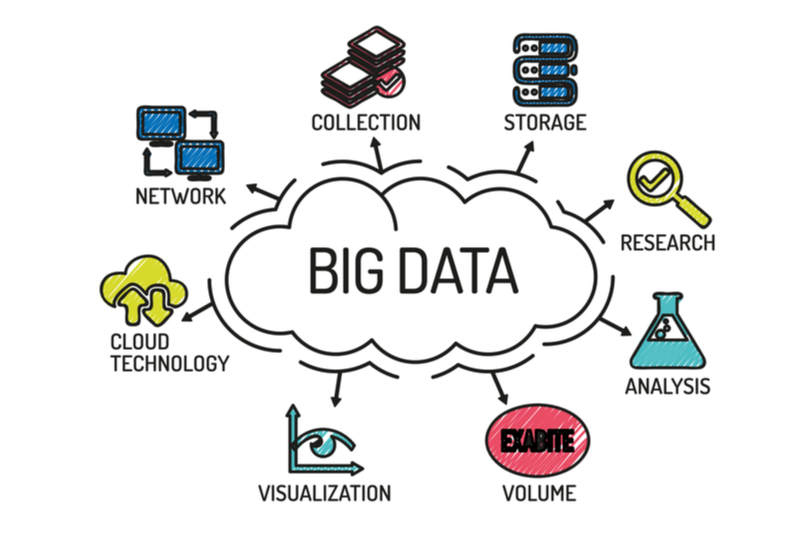
This needs a balanced response. There is no outright answer that will suffice the vast landscape of technological innovation and its effect on the practice of strategic communication.
In the business of delivering PR services, and particularly press release distribution services, I depend a fair bit on generating potential leads via targeted advertising through platforms like Google Ads, which is designed to reach my ideal audience based on certain criteria. What are those criteria? Audiences who are searching on Google’s search engine for press release distribution services. A key tool for me in this process is sifting through the big data of keywords that my potential clients are using on Google’s search engine looking for services such as the ones I’m offering. After making a selection out of those for say about 100 keywords, I make those a part of my Google Ads campaign in an attempt to pop at the top of the search. In an ideal situation, I hope to be in the top three sponsored ads for the campaign and hope to attract leads and take them straight to the landing page of my business’s website.
This usage of big data and targeted advertising is, in my opinion, an improvement for my business and a strategic way of communicating with my potential clients. As opposed to earlier strategies of communicating about my services to the masses via say advertising through cold calls, print media, radio announcements, or email marketing. Advertising only via the aforementioned mediums can make my service get lost in the chaos. It may or may not find my intended audience, and thus impact my return on investment. Targeted advertising gets me closer to the right kind of audience, promises higher lead generation, and is likely to deliver a better ROI.
I mentioned earlier about depending on big data to arrive at the right selection of keywords for my business. There are two ways those keywords can be utilized. One, of course, as discussed is including them in the Google Ads campaign. The other benefit is that those keywords reveal very specific requirements of my potential leads, which, in turn, helps me in making strategic marketing content aimed specifically at those requirements. To elaborate, the big data often indicates that clients are searching for press release distribution services for purposes such as product launches; award announcements; reputation or crisis management; financial disclosures. Once the broad requirements such as these are listed down, it makes it easier for me to design advertising campaigns that directly meet existing demand, exemplifying targeted communication. Social media static or video posts, blogs, off-page SEO articles, are some of the content marketing tools I can make use of to attract these potential leads further. This is the part of the process where artificial intelligence tools are most useful for. Using AI, helps me with tasks such as copywriting, blog post writing, designing creatives, making videos, etc., producing a much higher volume than would be possible for me by myself. For instance, where it might take me a day to prepare a complete LinkedIn carousel post, AI can generate multiple tailored posts across LinkedIn, Instagram, X, and Facebook within hours, boosting content output and improving campaign effectiveness. Thus, expanding my marketing reach in a shorter time span.
But big data and AI are not benefiting solely my business. These provide the same level of assistance to my competitors in PR services. With multiples businesses armed with a similar set of technological tools charging at the same pool of potential clients can lead to a sensory overload or chaotic situation for the customers. Automated systems might produce a deluge of tailored marketing campaigns, making it harder for businesses to stand out in any way. It is worth highlighting here the pain point with AI in such a competitive situation, where businesses are fighting for the attention of the potential client. While AI excels at handling repetitive and data-intensive tasks, it cannot fully replace human judgement in complex situations that require empathy, ethical reasoning, and strategic adaptability. As highlighted in a 2024 academic article, ‘… it is also crucial to remember that while these tools are valuable, success still hinges on creativity, strategic foresight, and the cultivation of meaningful relationships. New technologies can make data-driven decisions but cannot replace human qualities like empathy, emotional intelligence, and ethical judgment.’[1]
Issues such as privacy, bias of algorithms, and loss of the personal touch are real risks in this evolving digital marketplace. Ethical challenges include the potential for manipulation and concerns about the transparency and fairness of AI-driven campaigns. Maintaining authenticity and ensuring that AI-driven messages have active human oversight needs an integrated approach that does not fully surrender control to an AI agent.
I believe that technological innovation with big data and AI is beneficial for strategic communication, yes. It is continuously improving efficiency, targeting, monitoring, and personalizing for strategic PR and corporate communications. But these said benefits need to be balanced alongside ethical vigilance, ongoing human oversight, and a recognition of AI’s limitations when it comes to human judgement. The most effective version of strategic communication will combine the strengths of big data and AI with the irreplaceable skills of creative thinking and ethical responsibility, the onus for which lies heavily on PR and communications professionals.
[1] Pinto, Richard, Abhirup Bhadra, ‘Smarter Public Relations with Artificial Intelligence: Leveraging Technology for Effective Communication Strategies and Reputation Management - A Qualitative Analysis’, Revista electrónica de Veterinaria, vol. 25, no. 1 (2024).