10 Iconic Women Writers: Books I Edited and Loved
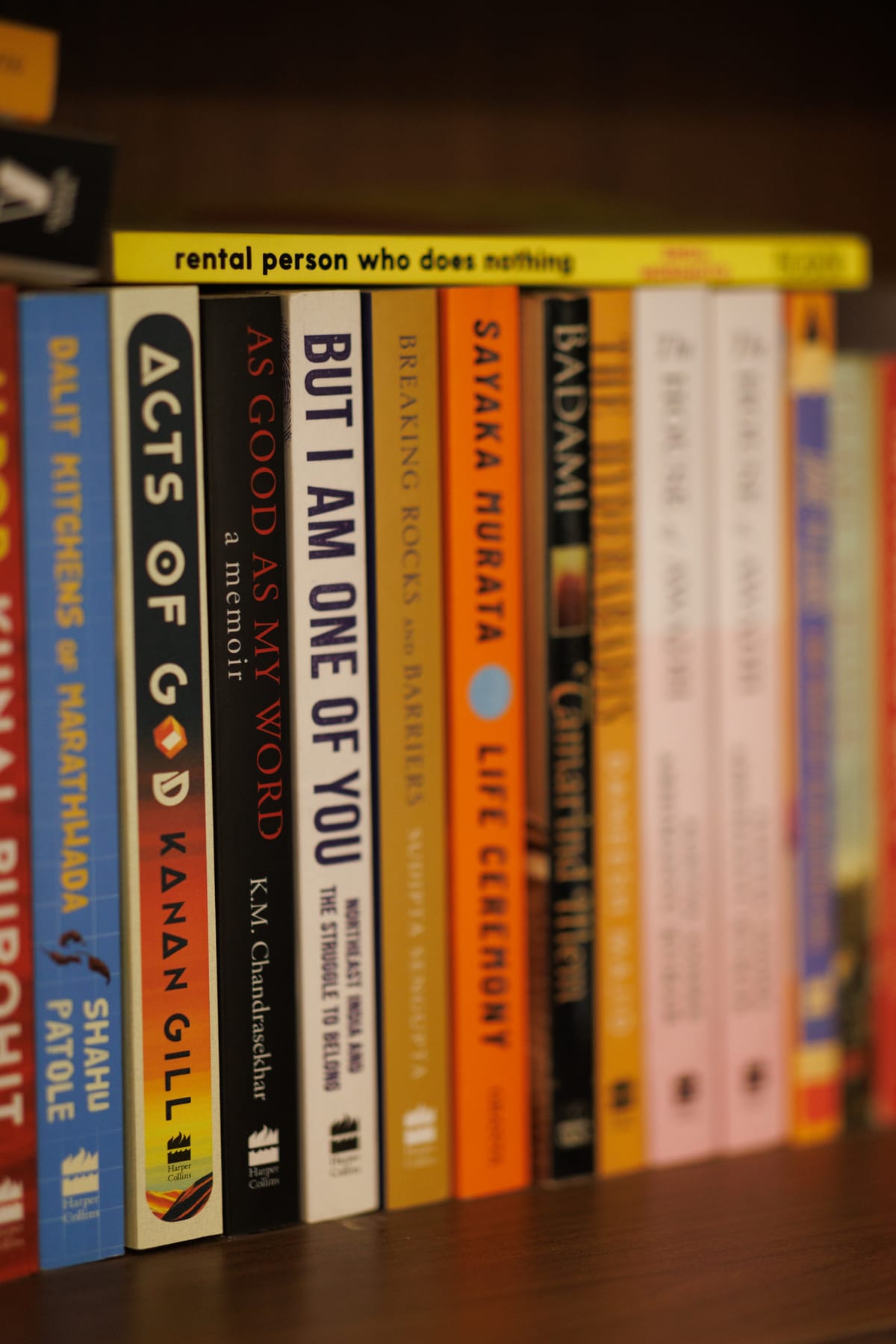
I worked in the business of storytelling for over 10 years. It was a decade of editing books on history, politics, society, culture, economics, films, travelogues, biographies, memoirs, translation, poetry, love stories, war stories, crime, mysteries, fantasies, science fiction, coffee table, slice of life, mythologies, business, cookery, spirituality, self-help, fitness, and then some.
There were fewer women writers than men, but they were every bit as terrific. Here are my top 10 favourite books by female authors that I had the privilege to work on as an editor.
Regrets, None by Dolly Thakore
Written with wit, humour and candour, this memoir follows veteran theatre personality Dolly Thakore’s life and career - growing up in Delhi and an assortment of Air Force stations, getting her start in theatre in college, her time in London, involvement with social issues, casting for Gandhi and filming it across India, working in radio, television and advertising while returning always to her first love, theatre. Dolly Thakore brings alive another era - the glitz, the glamour, the struggles. She speaks candidly about love, sex, infidelity, motherhood, commitment, the ecstasy and the heartbreaks. She emerges as a true-blooded embodiment of what it means to be a strong, empowered, vulnerable, courageous (and sometimes outrageous) woman.
Breaking Rocks and Barriers by Sudipta Sengupta
In this full of adventure memoir, Sudipta Sengupta narrates her many adventures as a geologist studying and doing fieldwork in remote areas around the world - from unexpected encounters with snakes in the Jaduguda mines of Bihar and trekking across a ‘black glacier’ in Norway to being engulfed by a thundercloud in Sweden and being greeted by a flock of penguins in Antarctica. In between are memorable mountaineering experiences, whether it is the first women’s expedition to the Ronti peak in the Himalayas in 1967 or the all-women expedition to an unexplored peak, which they were the first to climb and name.
But You Don’t Look Like a Muslim by Rakhshanda Jalil
What does it mean to be Muslim in India? What does it mean to look like one’s religion? Does one’s faith determine how one is perceived? Is there a secular ideal one is supposed to live up to? Can people of different faiths have a shared culture, a shared identity? India has always been plural, multi-cultural, multi-ethnic and multi-lingual, where various streams have fed into and strengthened each other, and where dissimilarities have always been a cause for rejoicing rather than strife. These writings, on and about being Muslim in India, by Rakhshanda Jalil - one of the country’s foremost literary historians and cultural commentators - excavate memories, interrogate dilemmas, and rediscover and celebrate a nation and its syncretic culture.
Sumitra and Anees by Seema Chishti
In the India of today, social and communal fault lines have become starker than ever before. Inter-faith marriages, once seen as the hallmark of a plural society, are now being increasingly used to further a divisive political narrative. Journalist Seema Chishti, herself the product of an inter-faith marriage from a time when the ‘idea of India’ was not just an idea but a lived reality, tells in this book the story of her parents: Sumitra, a Kshatriya Hindu from Mysore in Karnataka, and Anees, a Syed Muslim from Deoria in Uttar Pradesh. Woven into their story are recipes from Sumitra’s kitchen, a site of confluence for the diverse culinary traditions she mastered. This short book is an ode to all that made the coming together of Sumitra and Anees possible - a tribute to the big promise of India they brought into their modest home.
Mad Sisters of Esi by Tashan Mehta
Myung and Laleh are keepers of the whale of babel. They roam within its cosmic chambers, speak folktales of themselves, and pray to an enigmatic figure they know only as ‘Great Wisa’. To Laleh, this is everything. For Myung, it is not enough. When Myung flees the whale, she stumbles into a new universe where shapeshifting islands and ancient maps hold sway. There, she sets off on an adventure that is both tragic and transformative, for her and Laleh. For at the heart of her quest lies a mystery that has confounded scholars for generations: the truth about the mad sisters of Esi. Fables, dreams and myths come together in this masterful work of fantasy by Tashan Mehta, sweeping across three landscapes, and featuring a museum of collective memory and a festival of madness.
Loal Kashmir by Mehak Jamal
A rare collection of stories of love, longing and loss from a region that has witnessed decades of conflict. Loal, the Kashmiri word for love and affection, is the common thread running through all sixteen of these true-life narratives: Javed, on his way to show off his love letter to a friend, gets caught in a crackdown; newlywed Zara waits to be reunited with her husband in America, her visa application flagged indefinitely; Sagar and Aalmeen plan moments of stolen time during the uncertainty of militancy; Nadiya looks for Shahid from her window, coughing as caustic fumes of tear gas seep in; Khawar and Iqra struggle to reach each other when the abrogation of Article 370 leads to a shutdown across Kashmir. While the waves of discord in the Valley have been cemented in history, what has been rendered invisible are the lived experiences of its inhabitants.
Stoned, Shamed, Depressed by Jyotsna Mohan Bhargava
In this work of non-fiction, journalist Jyotsna Mohan Bhargava investigates the secret lives of India’s urban teens and comes up with an eye-opening account - of struggles with addiction to substances, social media and gaming, dealing with intense peer pressure, bullying and body shaming, and the resultant physical and mental health issues. This book chronicles the confused journey of Indian teens to adulthood - along a road that is full of temptation, where boundaries are easily blurred, and where the lure of easy adventure, often in the virtual world, can unleash events that have repercussions for years to come. The narrative interweaves accounts of teens, parents, teachers and child psychologists to reveal a deeply disturbing picture of modern-day school life in urban India.
Those Delicious Letters by Sandeepa Datta Mukherjee
A delicious novel about food, family and love! Soon after her fortieth birthday, Shubha starts receiving letters with traditional Bengali recipes from a mysterious lady in Calcutta claiming to be her grandmother. Never one for cooking, but drawn by the nostalgia and lured into the delicious world of forgotten food, Shubha starts experimenting with the recipes. The dishes are an instant hit with everyone she knows - everyone except Sameer, her very busy husband. As Shubha tries to find the mysterious writer and her own life begins to unravel, the notes from a bygone era give her courage to take a second chance at life. Torn between the taste of success that the letters bring her, and the need to save her marriage, Shubha looks for the perfect recipe for love.
The Book of Everlasting Things by Aanchal Malhotra
In Lahore, 1938, drawn by an intoxicating smell, Samir Vij first locks eyes with Firdaus Khan through the rows of perfume bottles in his family’s ittar shop in Anarkali Bazaar. Over the years that follow, the perfumer and the illuminator of manuscripts fall in love, their story written in dark and delicate ink. But with the 1947 Partition and the birth of two independent nations, Samir, a Hindu, becomes Indian and Firdaus, a Muslim, becomes Pakistani. Bound by family and fate, torn between duty and desire, as the two lovers move farther away from one other, they must decide how much of their memories to hold on to...
Ravanaleela by Radha Vishwanath
Ravana, perhaps the most popular Rakshasa in Indian mythology, is known as the villain in the Ramayana and the epic would not have been what it is without this great Rakshasa. Yet Ravana is much more than a mere abductor. Born out of the union of a Rishi and Rakshasi, a devout Shiv-bhakt and a mighty king, Ravana is no ordinary Rakshasa. This book attempts to bring out a comprehensive and well-rounded character of Ravana. The various little dots of information about the Rakshasa king as given in Valmiki Ramayana have been picked with care, collated and compared with presentations in several other versions of the Ramayana and the long, hoary lineage of the demon king painstakingly put together to present this villain of villains as a legend worthy of greater attention.